
USPSA Carry Optics Rules 2026 | Equipment Guide
Carry Optics (CO) is USPSA's most popular division, combining the accessibility of Production-legal handguns with the speed advantage of a red dot sight. Here's everything you need to know about CO rules and equipment.
Capacity: Unlimited
Trigger: DAO, DAK, or striker-fired
Holster: OWB, behind hip bone
Carry Optics Equipment Rules
Handgun Requirements
Frame: Must start as a Production-legal handgun. The gun's base model must appear on the USPSA Production Approved list.
Slide: Factory or aftermarket slides are allowed, but the optic must mount directly to the slide (no frame mounts or thumb rests with optic rails).
Barrel: Any length up to the maximum overall length limit.
Overall dimensions:
- Maximum length: 8.5 inches
- Maximum height: 5.5 inches (excludes sights and optic)
- Maximum weight: 45 oz (unloaded, with empty magazine)
Optic Requirements
Type: Slide-mounted reflex/red dot sight only
Mounting: Optic must be attached to the slide. Frame-mounted optics, scope mounts, and thumb rest optic mounts are not allowed.
Size: No specific size limit, but must fit within overall gun dimensions
Magnification: Non-magnified only (1x red dots)
Popular optics:
- Trijicon SRO
- Holosun 509T / 507C / 508T
- Leupold DeltaPoint Pro
- Aimpoint ACRO
- C-More STS
Magazine Capacity
Unlimited. Unlike Production's 10-round limit, Carry Optics has no capacity restriction. Use whatever magazines your gun and division rules allow.
Common setups:
- Glock 34: 23+ round magazines
- CZ Shadow 2 OR: 19+ round magazines
- Sig P320 X5: 21+ round magazines
Trigger Requirements
Trigger type must be:
- Double-action only (DAO)
- Double-action/single-action (DA/SA) - must start hammer down
- Striker-fired
Single-action only (SAO) triggers are NOT allowed in Carry Optics. This means 2011s and traditional 1911-style guns cannot be used.
Trigger modifications:
- Aftermarket trigger components allowed
- Trigger pull weight: no minimum
- Pre-travel, over-travel adjustments allowed
Holster Rules
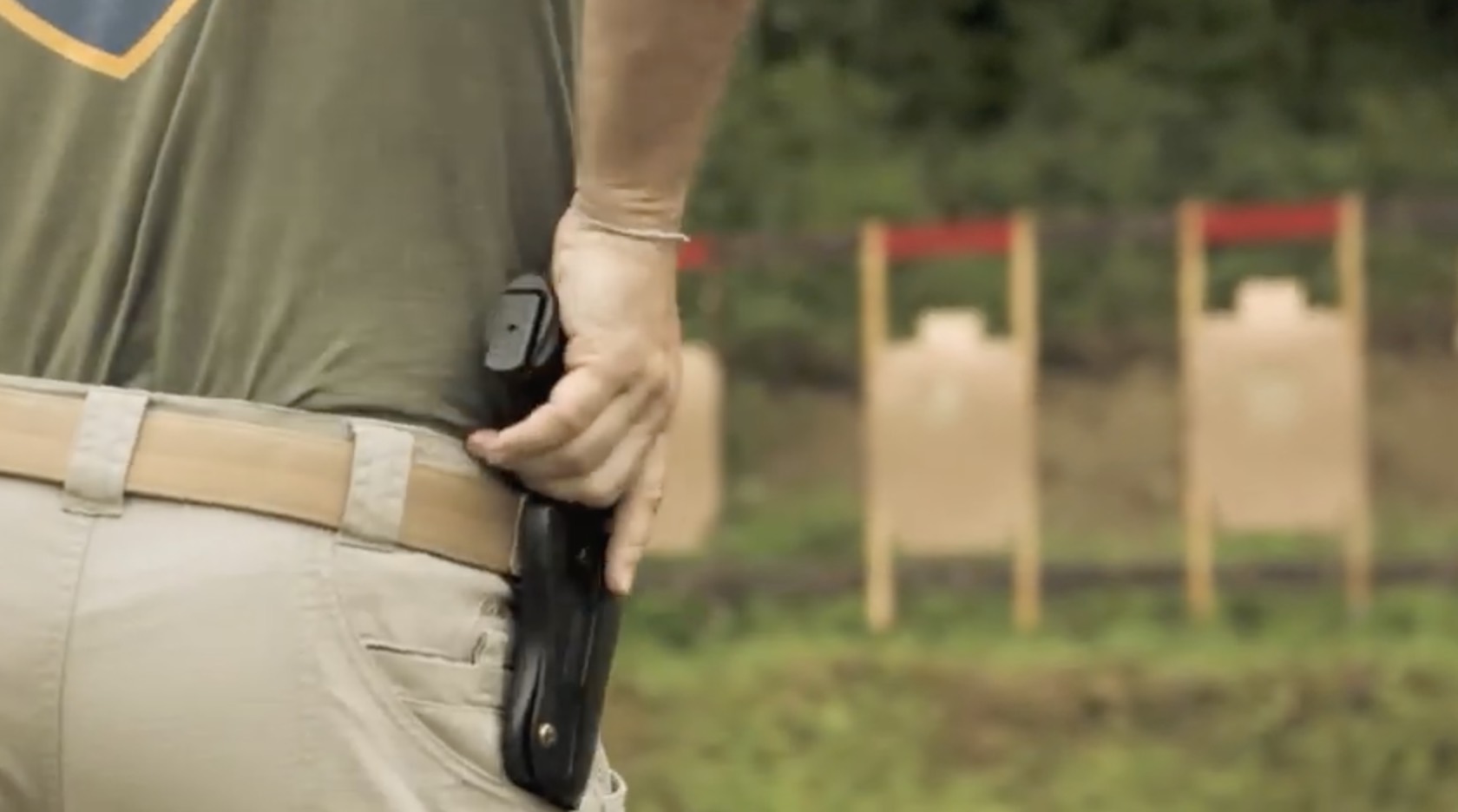
Position: Outside the waistband (OWB), positioned behind the hip bone when standing naturally
Attachment: Must be attached to a belt. Drop-offset holsters are allowed but must maintain legal position.
Retention: No specific retention requirements
Popular holster brands:
- Red Hill Tactical
- Ben Stoeger Pro Shop
- Double Alpha Academy
- Blade-Tech
Other Equipment
Magazine pouches: No restrictions on position or type. Most shooters run 3-4 pouches on their weak side.
Belt: Must be worn at waist level. Competition belts (DAA, CR Speed, etc.) are common.
Magwell: Magwell flares and extensions ARE allowed in Carry Optics (unlike Production).
Thumb rests: Allowed, but cannot include optic mounting provisions.
Compensators: NOT allowed in Carry Optics.
Popular Carry Optics Guns
Glock 34 MOS / 17 MOS
The most common CO gun. Factory optic-ready, huge aftermarket support, reliable.
Pros: Affordable, reliable, tons of parts availability Cons: Grip angle takes adjustment, trigger requires work for most
CZ Shadow 2 Optic Ready
Premium factory option with excellent trigger and ergonomics out of the box.
Pros: Great trigger, low bore axis, refined ergonomics Cons: Higher cost, heavier than polymer guns
Sig Sauer P320 X5 Legion
Factory competition-ready with optic cut and upgraded trigger.
Pros: Modular, good trigger, optic ready Cons: Some report durability concerns under high round counts
Walther PDP
Factory performance pistol with optic cut and performance trigger.
Pros: Excellent ergonomics, good trigger, competitive price Cons: Newer platform, less aftermarket than Glock
Canik Rival
Budget-friendly competition option with factory optic cut.
Pros: Low cost, good features out of box Cons: Less aftermarket support
Setting Up Your CO Rig
Step 1: Gun Selection
Start with a Production-legal gun that fits your hand. The "best" gun is subjective—what matters is that you can grip it consistently and manipulate controls efficiently.
Budget considerations:
- Entry ($500-800): Glock 34 MOS, Canik Rival
- Mid-range ($800-1,200): Sig P320 X5, Walther PDP Pro
- Premium ($1,200+): CZ Shadow 2 OR, Staccato C2 (if SA triggers become allowed)
Step 2: Optic Selection
Choose based on:
- Window size: Larger windows are more forgiving
- Durability: Closed emitter (509T, ACRO) vs open emitter (SRO, DPP)
- Dot size: 2-3 MOA is standard for competition
Common choices:
- Trijicon SRO: Large window, popular with top shooters, but fragile
- Holosun 509T: Closed emitter, good value, durable
- Aimpoint ACRO: Ultra durable, smaller window
Step 3: Holster and Mag Pouches
Get a competition holster that:
- Has adjustable retention
- Positions the gun consistently for your draw
- Fits your optic setup
Start with 3 magazine pouches. Position them for efficient reloads during movement.
Step 4: Magazines
Buy enough magazines for full stages plus spares:
- Minimum: 4 magazines
- Recommended: 6+ magazines
Higher capacity magazines reduce stage reloads but cost more.
Carry Optics Training Tips
Master Red Dot Presentation
Unlike iron sights, you must present the gun so the dot appears in your field of view. This requires consistent grip and draw mechanics.
Dry fire drill: Draw and present to target, finding the dot as quickly as possible. Par time goal: under 1.0 seconds to first shot at A class.
Dot Tracking
Learn to track the dot through recoil rather than searching for it between shots. This requires:
- Consistent grip pressure
- Proper support hand engagement
- Visual discipline
Reload Under No Pressure
With unlimited capacity, plan reloads strategically:
- Reload during movement between positions
- Avoid reloading when you could be shooting
- Practice reload to first shot under par time
Frequently Asked Questions
Can I use a 2011 in Carry Optics? No. 2011s have single-action triggers, which are not allowed in Carry Optics. Use Limited Optics or Open for 2011s.
Is there a magazine capacity limit? No. Carry Optics has unlimited capacity (unlike Production's 10+1 limit).
Can I add a magwell to my gun? Yes. Magwells are allowed in Carry Optics but not in Production.
Can I use a compensator? No. Compensators are not allowed in Carry Optics. For comps, shoot Open division.
What's the difference between Carry Optics and Limited Optics? Carry Optics requires Production-legal frames with striker/DAO triggers. Limited Optics allows single-action triggers and race gun modifications (2011s, etc.).
Can I use iron sights as backup with my red dot? Yes, you can have suppressor-height iron sights as backup, but most CO shooters run dot-only.
Drills for Carry Optics
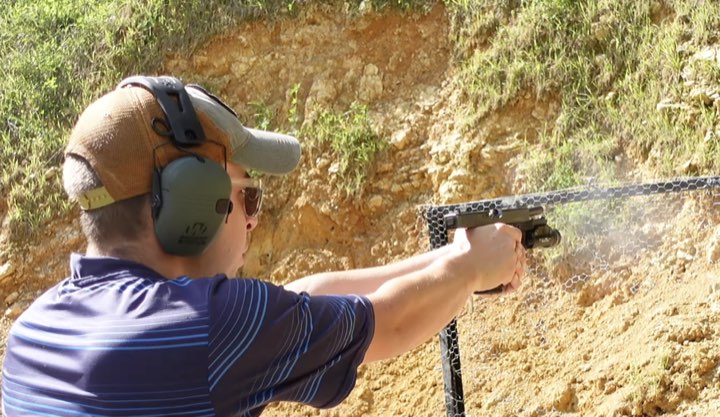
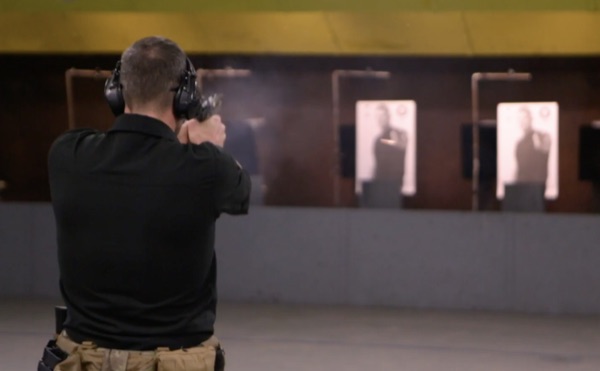
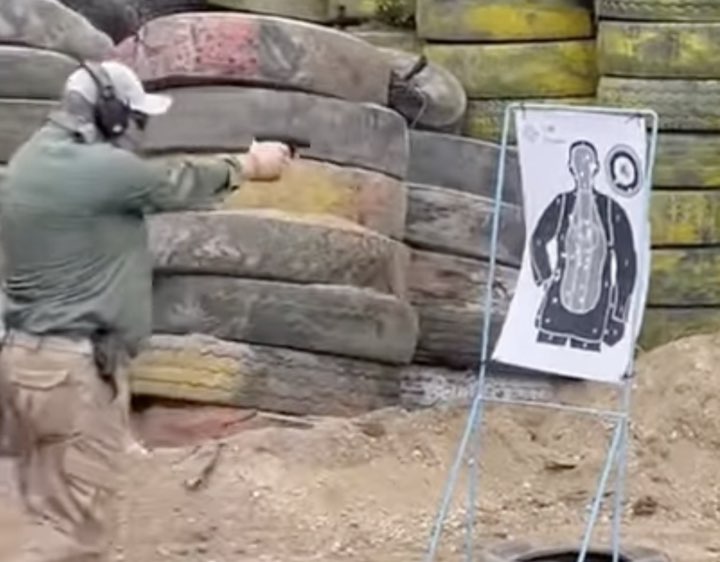
Practice these drills to build Carry Optics skills:
Related Guides
- USPSA Divisions Explained – All divisions compared
- USPSA Classifier Guide – Classification system and par times
- Training for USPSA – Complete training guide
- Best Shot Timer Apps – Timer apps for training